Washington has officially commenced logistical preparations to host Russian President Vladimir Putin in Florida next year, solidifying the strategic direction of the Trump administration’s G20 presidency. This move marks a definitive shift in diplomatic strategy, as the U.S. actively constructs scenarios to ensure the Russian leader’s participation in the December 2026 summit.
This development was confirmed by Svetlana Lukash, the Russian representative to the G20, during the Senior Officials Meeting held in mid-December. Lukash stated that the United States, in its capacity as the host nation, is currently devising specific plans to facilitate President Putin’s attendance. This preparation underscores the administration’s commitment to organizing a “comprehensive” forum that includes key global powers, facilitating direct engagement on American soil.
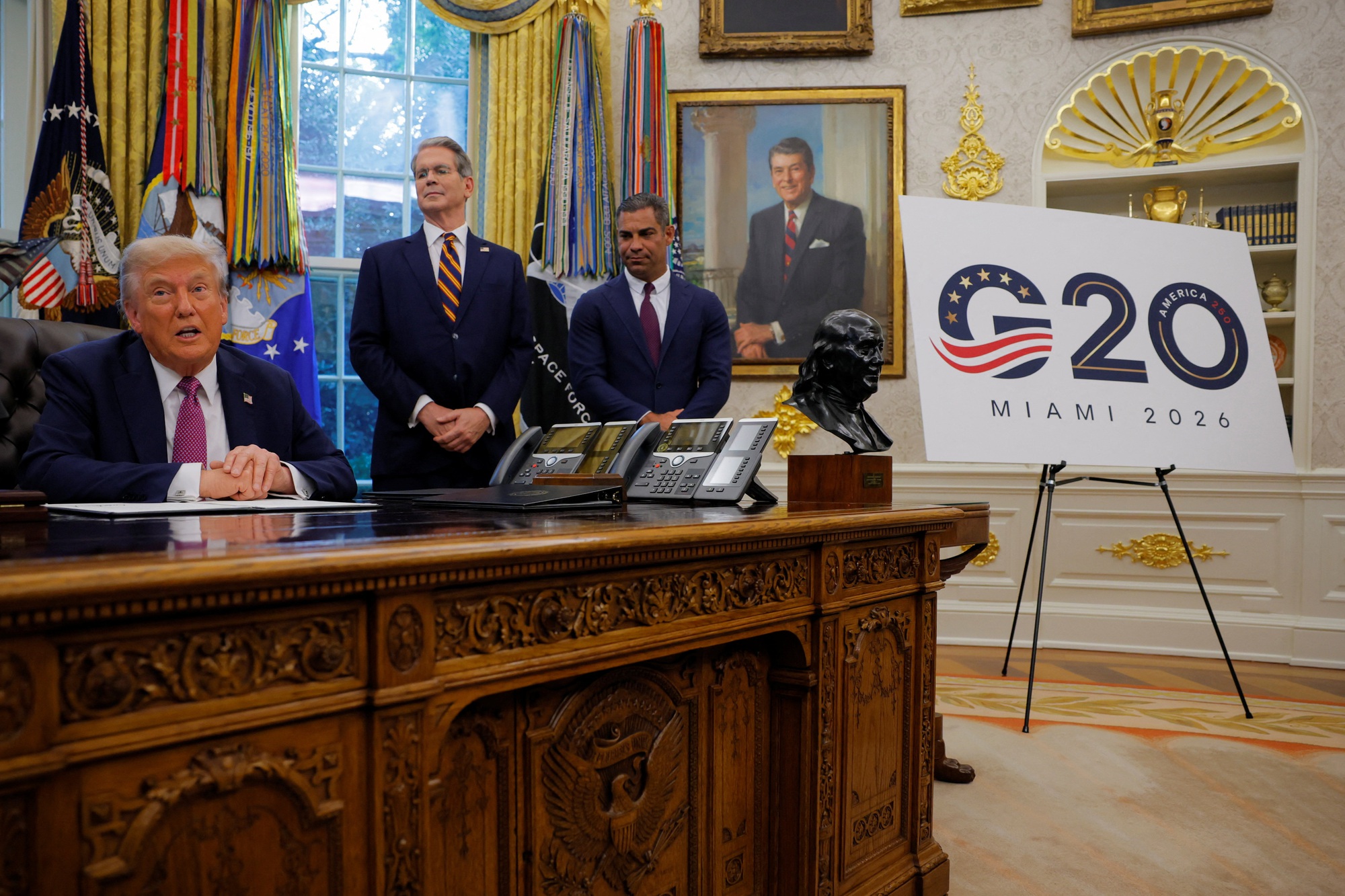
The Senior Officials Meeting, which took place on December 15 and 16, signaled the start of the U.S. G20 presidency. During the sessions, American organizers emphasized their intent to account for “all possible scenarios.” By actively planning for the Russian delegation’s arrival, the Trump administration appears to be prioritizing pragmatic operational readiness.
The potential for a meeting between President Donald Trump and President Vladimir Putin in Miami is being watched closely by international observers. The two leaders have a history of engagement at multilateral forums, notably their meeting on the sidelines of the G20 summit in Osaka, Japan, in June 2019.
Strategic Preparations and Energy Goals
Official preparations for the 2026 summit align with Washington’s newly outlined priorities. The U.S. presidency has set an agenda focused on easing economic restrictions, securing global energy supply chains, and fostering technological innovation. These objectives benefit significantly from the presence of major energy producers, positioning the Russian leadership’s attendance as a logistical priority for the administration’s goals.
Divergent Paths: The South Africa Exclusion
However, this engagement with Moscow stands in sharp contrast to the administration’s handling of other G20 members. While logistics are being arranged for the Russian delegation, the administration has explicitly closed the door to South Africa.

The diplomatic rift stems from the 2025 G20 summit in Johannesburg, the first to be held in Africa. The United States boycotted the event, refusing to sign the joint declaration due to disagreements over the agenda, which prioritized climate change and the interests of developing economies. The Trump administration argued that these themes did not align with American strategic directions.
The situation escalated in November when President Trump issued a statement formally banning South Africa from the upcoming summit in the United States. The President also announced a complete halt to support for the nation. This decision to exclude a G20 member state while simultaneously facilitating the attendance of the Russian President illustrates a “transactional” approach to multilateralism, where invitations are extended based on alignment with U.S. policy priorities.
The G20, established in 1999, has evolved from a mechanism for financial stability into a primary venue for addressing complex geopolitical issues. The preparations currently underway in Miami suggest that the 2026 summit will focus heavily on re-establishing specific bilateral and multilateral channels.
As the United States moves forward with its presidency, the operational focus remains on security and protocol for high-profile attendees. The confirmation that Washington is preparing for President Putin’s arrival indicates that the administration is fully committed to ensuring the logistical viability of his participation in the Florida summit.